


Tài liệu tham khảo
KYC Provider and ID Verification Process The Comprehensive Broker Guide
Ping Identity can help with identity verification and MFA, as well as threat protection, data governance, and more, making it easier to deliver secure customer and employee experiences. KYC is an ongoing process that goes beyond just verifying a customer’s identity. It’s a way to ensure the customer is who they say they are and to build trust with them.
Common KYC requirements for individuals
In this blog, we’ll explain the regulatory framework, the technologies driving change, and the steps you need to take to stay compliant, efficient, and secure. Most major jurisdictions in the financial space mandate KYC requirements as well as all regulated brokers. There are a number of KYC services, software, programs, and third-party companies that can help with the development, implementation, compliance insurance, and maintenance of a KYC solution. These will need to be validated through proper documentation, often a Social Security (SS) card, driver’s license, or passport. If a customer or entity is deemed high-risk, an enhanced level of due diligence is required that can involve more documentation and information.
Navigating KYC, AML and Identity Verification in New Zealand
Since the pandemic and with enhancements in technology, digital banking is especially common with an expected 65.3 percent of the United States population using digital banking in 2022. This makes KYC even more imperative during the customer onboarding process, which is now regularly performed online and remotely. Know Your Customer is a set of procedures and guidelines that fits under a financial institution’s AML (anti-money laundering) policy. It impacts nearly all sectors of business, but it is especially relevant for financial institutions, such as banks and related sectors including investment and trading operations, insurance, and real estate. In the banking industry, KYC is a must-have to verify the identity of customers and prevent money laundering.
KYC (Know Your Customer): Why Verification Became a Standard
KYC is an important step for brokers since it allows regulatory bodies across the world to protect all stakeholders in the financial industry, including traders and brokerage firms. This is why, apart from the initial KYC at the time of onboarding, some jurisdictions might require renewing of KYC information from time to time to ensure updated records. As we move forward in this digital age, following compliances fxverge reputation imposed on institutions, especially banks, have become inevitable.
Who can certify KYC documents?

KYC involves collecting personal information, such as government-issued IDs, and continuously updating and monitoring this data to maintain accuracy. Binderr Compliance enables a risk-based kyc verification process with dynamic scoring, automated CDD/EDD triggers, and real-time AML screening, helping teams prioritize high-risk profiles efficiently. A well-structured KYC process is essential for businesses operating in regulated industries in 2026. From identity verification to AML screening and continuous monitoring, each step plays a critical role in preventing fraud and ensuring compliance.
Active versus Passive Liveness Checks
- Banks, fintech platforms, real estate firms, e-commerce companies, and similar entities are required by law to implement KYC checks.
- When it comes to crypto exchanges, processes like Know Your Customer (KYC) verification can feel like a formality.
- No one can emphasize enough how important measure it is to comply with KYC regulations.
- The examples below are for illustrative purposes as verification steps may vary across forex brokers.
- Reduces Financial Crime Risk – The kyc process in banking and fintech plays a key role in identifying high-risk individuals through AML screening, sanctions checks, and adverse media monitoring.
- By combining automation, smart data capture, and user-friendly design, businesses can enhance the digital kyc process while maintaining strong compliance.
Additionally, there may be KYC requirements involved in opening certain types of accounts or receiving certain types of services. Overall, getting KYC is a relatively straightforward process that can help to ensure your safety and security when interacting with any type of financial institution. IDnow is a global leader in the identity verification industry and has been involved with KYC processes since 2014. It has launched AutoIdent as an advanced, comprehensive platform for identity verification. This offers automated verification, supported by biometrics and artificial intelligence, as well as manual video-based verification.
Integrating into Onboarding Process
From a compliance perspective, a sudden, substantial increase in account equity that cannot be explained by monthly salary could impact a trader’s client profile. Brokers must verify these events to ensure accounts are not being used to transfer large sums of money of unknown origin. Providing documentation for these events helps the broker reclassify your account’s funding capacity, often allowing for higher deposit limits and smoother future withdrawals. Official correspondence from a government agency like a social security department, electoral commission, or local municipality can serve as an alternative if you do not have utility bills in your own name.
Identity Fraud and Synthetic Identities
Common prompts in active liveness checks include blinking, turning your head slowly from side to side, or smiling. Occasionally, traders may be asked to read a short sequence of numbers aloud to verify lip synchronization. Because CFDs involve using capital borrowed through high leverage, they carry a significant risk of incurring losses rapidly. If your answers indicate you lack sufficient knowledge and experience to understand the risks, the broker may limit the leverage ratio available or even decline registration altogether. Here are several examples of multiple-choice questions commonly included in suitability tests. If you have recently changed your legal name due to marriage or deed poll, you should be prepared to provide supporting evidence, such as a marriage certificate, alongside your primary ID.
The all-in-one KYC Solution. Try Binderr!
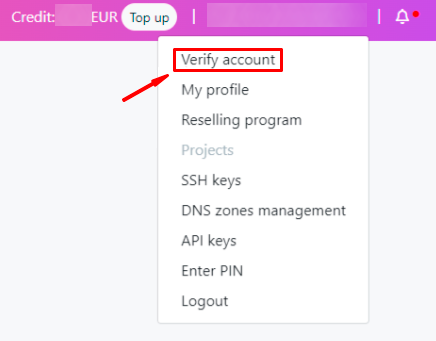
Using profits from a business you own adds a layer of complexity, as the broker must distinguish between company funds and personal income. Regulated brokers are strictly prohibited from accepting third-party payments, and from a compliance perspective, a company is a separate legal entity even if you are the sole owner. If funds move directly from a business account to a personal trading account, it may be flagged as an unauthorized third-party deposit. The broker’s goal is to ensure your trading activity is proportionate to your declared income.
Before registering with any broker, we first review their terms and conditions to identify which clients are restricted from opening live accounts. During our testing at Fusion Markets, we found that the broker does not accept registrations from the US, Spain, Ukraine, New Zealand, Russia, Japan, and several other jurisdictions. Fusion Markets also requires a minimum age of 18 to open a live account, as specified in its Client Services Agreement. However, forex traders must ensure that the separate PoA document they provide matches the current residential address they entered during registration. The document must be recent, usually issued within the last three to six months, and must clearly show the issuer’s logo or name. Review their capabilities to find the crypto KYC provider that fits your compliance needs in 2026.
What is Third-Party Risk Management
These obligations now extend beyond banks — fintech companies, virtual asset dealers, and non-profits in many jurisdictions face the same requirements. However, data shows not all law firms have sufficiently robust cyber security measures in place. In 2025, 3,153 cyber incidents were reported to the Information Commissioner’s Office (ICO), 220 of which were from the legal sector. Despite mature frameworks, KYC programs face persistent operational challenges that affect accuracy, cost, and customer experience. KYC requirements are set by international standards bodies and enforced by national regulators.